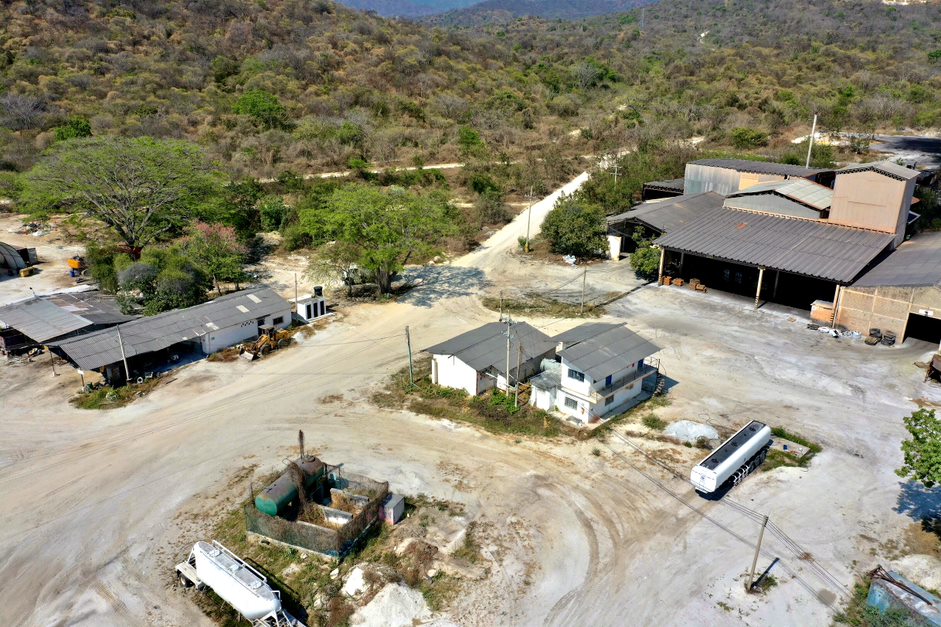
What is limestone?
Limestone is a sedimentary rock mainly composed of calcium carbonate (CaCO₃) in the form of the mineral calcite. It forms over millions of years through the accumulation of shells, corals, and marine organisms, as well as by direct precipitation from water. Limestone is one of the most abundant and widely used natural resources in the world, playing a critical role in construction, industry, agriculture, and environmental applications.
How is limestone formed?
Limestone is typically formed in shallow, warm marine environments. Over time, the accumulation of biological debris, such as coral fragments and shell remains, combines with chemical precipitation to form compact layers of calcium carbonate. These layers are compressed under geological pressure to form the rock we know as limestone.
There are two main types of limestone formation:
- Biological origin: From marine life debris like shells and skeletons.
- Chemical origin: Direct precipitation from calcium-rich water in caves or seabeds (e.g., travertine).
Key properties of limestone
| Property | Description |
|---|---|
| Color | White, gray, cream, tan, or yellowish |
| Composition | Mostly calcium carbonate (CaCO₃) |
| Texture | Fine to coarse-grained |
| Hardness | 3 to 4 on Mohs scale |
| Reaction to acid | Reacts with dilute hydrochloric acid |
| Porosity | Moderate to high depending on the type |
Main uses of limestone
1. Construction industry
- Cement production: Limestone is the primary ingredient in Portland cement.
- Aggregate: Crushed limestone is used as base material for roads, buildings, and concrete.
- Dimension stone: Cut and polished limestone is used for facades, flooring, and sculptures.
2. Agriculture
- Used to produce agricultural lime, which neutralizes acidic soils and improves fertility.
- Enhances the uptake of nutrients by crops and increases pH balance in fields.
3. Environmental applications
- Used in flue gas desulfurization to reduce sulfur dioxide emissions from power plants.
- Acts as a natural water filtration material in wetlands and treatment plants.
- Aids in the neutralization of acid mine drainage.
4. Manufacturing and industry
- Used in the steel and glass industries as a flux to remove impurities.
- Ingredient in the production of quicklime and slaked lime.
- Essential for paper, rubber, and paint manufacturing.
5. Animal feed and food industry
- Calcium source in animal feed.
- Food-grade limestone is used as a dietary calcium supplement.
Types of limestone
| Type | Description |
|---|---|
| Chalk | Soft, white, porous, formed from microscopic marine organisms |
| Travertine | Chemically formed limestone, used in architecture and flooring |
| Fossiliferous | Contains visible fossils, often decorative |
| Coquina | Composed of loosely cemented shell fragments |
| Oolitic | Made of tiny spherical grains (ooids), common in ancient reefs |
Benefits of using limestone
✅ Natural and abundant
Found across the globe, limestone is one of the most widely available materials.
✅ Eco-friendly
Used in environmental remediation, wastewater treatment, and soil recovery.
✅ Durable and strong
Ideal for construction due to its load-bearing and weather-resistant properties.
✅ Cost-effective
Limestone is generally more affordable than other natural stones like granite or marble.
✅ Versatile
It can be used in a wide range of industries, from agriculture to advanced manufacturing.
How limestone impacts modern life
Limestone is present in roads, buildings, toothpaste, paper, plastics, food supplements, and even in the air we breathe (via pollution control). Its importance cannot be overstated, especially in today’s era of sustainable development and resource efficiency.
Limestone in the United States: key facts
- The U.S. produces over 900 million tons of limestone annually.
- Major limestone-producing states include Texas, Florida, Missouri, Pennsylvania, and Kentucky.
- The U.S. is a global leader in limestone production and export.
- American limestone is highly regarded in international markets for its purity and consistency.
How is limestone mined?
Limestone is extracted through:
1. Open-pit mining
- Most common method.
- Uses drilling, blasting, and crushing to extract and process the stone.
2. Underground mining
- Used when the stone is located deeper below the surface.
- Often employed to preserve landscapes or avoid surface disturbance.
Environmental impact of limestone mining
While limestone is eco-friendly in many of its applications, mining must be managed responsibly to avoid:
- Landscape degradation
- Dust and air pollution
- Water table disturbance
Sustainable practices include reclamation plans, dust control systems, and rehabilitation of mined areas.
Global limestone market overview
Market value
- The global limestone market is projected to reach $95 billion by 2030, driven by construction and agriculture demand.
Key trends
- Rising demand for clean energy and carbon capture (limestone is key in CCS).
- Infrastructure projects in developing economies.
- Use of limestone as a carbon-neutral building material.
Frequently asked questions about limestone
Is limestone safe for home use?
Yes. It’s non-toxic and widely used in home construction and garden soil conditioning.
Can limestone be recycled?
Yes. Crushed limestone can be reused in construction materials like road bases and concrete mixes.
What’s the difference between limestone and marble?
Marble is a metamorphic rock formed from limestone under heat and pressure. It is denser and used primarily for decorative applications.
What is quicklime?
Quicklime (CaO) is produced by heating limestone and is used in cement, steel, and chemical industries.
Tips for buying limestone
- Check the calcium carbonate content (above 90% for high-grade).
- Ensure moisture levels are low if used for agriculture.
- For construction, verify compressive strength and weather resistance.
- Work with reputable suppliers to ensure quality and sustainability compliance.
Innovations using limestone in 2025
- Carbon capture: Used in CCS systems to trap CO₂ emissions from power plants.
- Eco-cement: Blended cements with limestone to reduce carbon footprints.
- Nano-limestone: In high-performance polymers and coatings.
- Hydrated lime in pharmaceuticals: Used in neutralization and purification processes.
Limestone and sustainability
Limestone helps reduce global warming potential when:
- Used in green building materials.
- Applied in carbon capture technologies.
- Integrated into circular economy models with reuse and low-carbon processing.
Conclusion: limestone’s role in building a better future
Limestone is more than just a rock — it’s a foundational material in modern construction, agriculture, manufacturing, and environmental protection. As global industries move toward sustainability, limestone will continue to play a critical role in innovation, carbon reduction, and natural resource management.
Whether you’re in construction, farming, industrial manufacturing, or even tech innovation, understanding and leveraging the potential of limestone in 2025 is vital for long-term growth and environmental responsibility.